

Featured Resources
Tools to learn, train, and strengthen your approach

Cultural Competence Classes
Free classes designed to help mental health professionals understand gun culture, improve communication, and reduce barriers to care.

ROOTS Project by WTTA
An initiative focused on educating healthcare and research communities about responsible firearm storage options and the role of access in prevention.

Gun Friendly Therapist Directory and Request Form
A directory designed to help connect gun owners to clinicians who understand the firearms community.

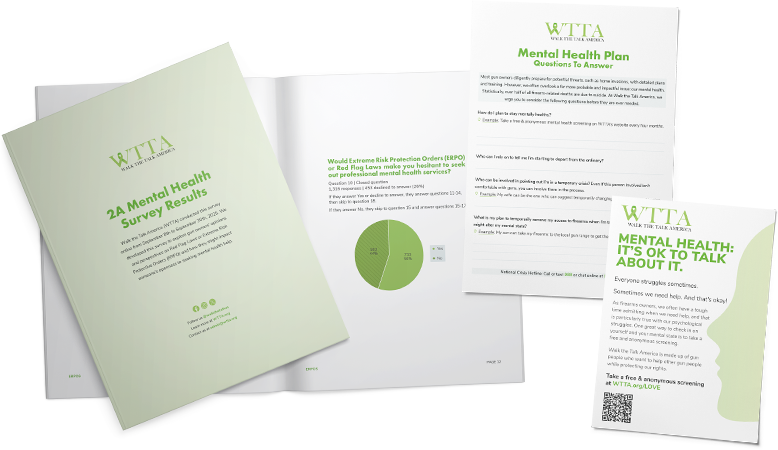
2A Mental Health Survey Results
A resource that explores gun owners’ opinions and perspectives intended to inform education, program design, and research conversations.

Consulting and Speaking Requests
Support from us for conferences, clinics, research initiatives, and organizations seeking speaking engagements, training, or guidance.
Tools you can share with clients and communities
Free, Anonymous Mental Health Screenings
A private check-in tool that individuals can take online to better understand where they stand and explore next steps.
WTTA Mental Health Plan
A practical prevention tool to share with gun owners that they can complete during a steady season, so they have a plan when life gets heavy.

Responsible Firearms Storage Basics
Clear education on responsible storage options that can support voluntary safety planning conversations.
Download and print: Bi-fold or Vertical Flyer

Cause A Pause
A simple tool for individuals that helps create space between a tough moment and a permanent decision.
Mental Health Inserts and Printable Materials
Printable handouts that help normalize mental health check-ins and connect individuals to resources.
Suggested ways to use these resources
In clinical practice
- Use responsible storage resources as part of discussions
- Provide the links to the free and anonymous mental health screenings and the WTTA Mental Health plan as potential follow-up tools
- Use culturally informed language to reduce defensiveness and increase engagement
- Advise time on the range if a client appreciates shooting
In research and education
- Incorporate practical firearm storage options into study design discussions
- Use the 2A Mental Health survey results to inform hypotheses, messaging, and outreach
- Invite WTTA to support community-facing recruitment or education
Need help bringing this to your organization?
Firearms and mental health can be sensitive topics, and many professionals want to engage thoughtfully but are not sure where to start. If you want extra support for an event, training series, or program design, we are happy to help.