

Walk the Talk America (WTTA) attended this conference with a clear purpose, to help close one of the most persistent gaps in this space, the cultural distance between those doing the research and those most affected by how solutions are framed, including firearm owners, families, and communities.
WTTA’s work sits at the intersection of suicide prevention, mental health, and firearm ownership. That intersection can be a place of friction, but often that friction is far less than people of various backgrounds may perceive. It can also be a place of real progress when the conversation is handled with curiosity, humility, and practical intent. The conference reinforced both truths.
What it felt like to be in the room
The overall tone of the conference was serious, evidence-driven, and, importantly, increasingly open to nuance. You could hear it in the language. Many sessions moved beyond broad debates and focused on measurable questions, such as what interventions reduce harm, what barriers prevent uptake, which communities are being missed, and how to evaluate outcomes without reducing human beings to numbers.
At the same time, it’s hard to ignore that the “typical” conference lens still leans toward public health frameworks that can unintentionally flatten gun culture into a stereotype. Sometimes the assumptions are subtle, like treating firearm ownership primarily as a risk factor rather than also a reflection of identity, responsibility, family tradition, or perceived duty. Sometimes they’re more obvious, like discussions that center on compliance and regulation while barely mentioning trust, voluntary participation, or the realities of living in a country where firearms are common.
WTTA’s takeaway was not that the conference is hostile to firearm owners. The takeaway was that many researchers simply do not have repeated, meaningful contact with everyday gun owners who are thoughtful, safety-minded, and invested in mental wellness. Without that contact, even well-intentioned interventions can fall short.
The encouraging shift: a lot of attention towards safety products and productive conversation
This year, WTTA was bringing something new to the conference. While Walk the Talk America Founder Michael Sodini was a panelist at the 2024 conference, this year, he was introducing something the research community had not had much exposure to. The latest and greatest technological devices in firearm safety. While it was encouraging to see presentations on how much better implementation of lock boxes would be compared to cable locks, there was still a gap and an opportunity.
Walk the Talk America was able to have a table in the hallway with other research institutions and organizations with relevant information. At that table WTTA highlighted the products of it’s ROOTS Project members. This table had biometric cable locks with motion detection capabilities from Regal Products, it had biometric quick access devices from Vara Safety, motion detection tamper alert devices from Kinisium, GPS location and motion detection tracking from GunAlert, and a biometric slide lock device B.O.S. Lock.
Researchers valued exposure to these new products and features, and it was evident that the wheels were turning on how they could utilize them in the next evolution of research. In fact, one university selected a few of the products to enter into its latest research study, which was launching the next month.

The tension: language, framing, and the trust gap
As encouraging as the conversations around innovation and safety technology were, the conference also made clear why even strong solutions can struggle to reach the communities most at risk.
The core tension is not a lack of data or good intentions. It is language, framing, and the trust they either build or erode.
In some sessions, the terms used to describe firearm ownership or firearm owners carried unintended weight. Even when no offense was meant, certain framing choices could trigger defensiveness almost instantly. When people feel labeled or misunderstood, they stop listening. When they stop listening, they disengage. And when engagement breaks down, even the most evidence-based interventions lose their effectiveness.
WTTA does not enter these spaces to police vocabulary or to win semantic debates. But language matters because it signals who is welcome in the solution and who is merely being managed by it.
For example, in the research world, promoting the storage of firearms separate from ammunition is the gold standard. Yet WTTA pointed out that promoting that as the best practice instantly removes credibility with your audience, as most gun owners have a firearm for home defense and believe every second counts. You aren’t going to ask a home intruder to wait a minute as you have your gun, but the ammo is in the closet across the hallway.
You can see understanding and in some people, a sense of relief that a missing variable in their messaging was the error in why progress isn’t being made.
Similarly, conversations that position policy as the primary lever for change can feel disconnected from the day-to-day questions many gun owners are already wrestling with at home:
- How do I store firearms responsibly without sacrificing quick access?
- How do I talk to my spouse or family when stress is building but before it becomes a crisis?
- Where do I find mental health support that won’t judge me for owning firearms?
WTTA’s perspective is that the trust gap is not a secondary challenge. It is the challenge. Trust determines whether someone seeks help early, considers temporary changes during a difficult period, or avoids support altogether out of fear of judgment or consequences.
Where WTTA’s perspective added value
Against that backdrop, WTTA’s presence at the conference was not about positioning itself as a counterpoint or dissenting voice. It was about expanding the research conversation to include cultural competency as a core variable, not an optional consideration.
Through informal conversations that surrounded the formal presentations, WTTA consistently returned to three themes.
First, culture shapes behavior as much as education does.
Information alone does not drive action. People are far more likely to engage with resources when the message aligns with their values and comes from a trusted source. Firearm owners are not a monolith, but many respond best to framing rooted in responsibility, family protection, competence, and personal ownership of outcomes.

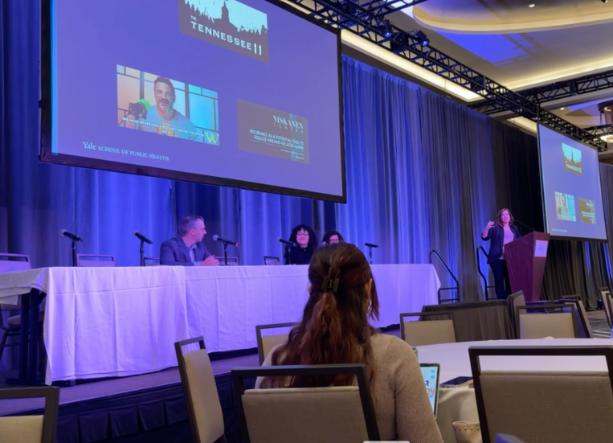
(A message about Founder Michael Sodini in a Zoom meeting with researchers)
Second, voluntary and dignity-preserving solutions are essential.
When help-seeking is perceived as punitive, people avoid it. WTTA advocates for approaches that preserve autonomy and dignity, including voluntary responsible storage options, having a mental health plan to go along with your home defense plan, and clinician training that reduces stigma rather than reinforcing it.
Third, the “in-between” space is where lives are saved.
Most crises do not begin with a single dramatic moment. They unfold gradually, through sleep disruption, chronic stress, isolation, financial strain, pain, relationship breakdown, or a slow erosion of hope. Effective prevention must meet people earlier in that curve, with tools and support that feel realistic, accessible, and human.
A nuanced view: progress and blind spots can coexist
WTTA left the conference with a balanced conclusion: the field is moving forward, and meaningful blind spots remain, but we have a place in these rooms and are valued to be in them.
The progress is real. Researchers are doing complex, necessary work under intense scrutiny, and many are deeply committed to reducing harm without inflaming division. The growing focus on suicide prevention, community-based initiatives, and implementation science reflects a field that is maturing beyond abstract debate. They are including the firearm community by inviting them to attend, and in their presentations, as Kerri Raissian showed by including her relationship with WTTA and her appearance on the WTTA podcast in her presentation in the main conference room.
At the same time, blind spots persist when firearm ownership is treated primarily as pathology or political signal rather than as a widespread reality in American life, often tied to identity, responsibility, and deeply held values. Solutions that fail to account for that reality can unintentionally reinforce resistance rather than reduce harm.
WTTA’s position is not “research versus culture.” It is “research plus culture.” Data and cultural competency are not competing priorities. They are complementary requirements for impact.
What WTTA hopes comes next
WTTA’s experience at the conference sharpened its hopes for the next phase of firearm harm prevention research:
- Deeper partnerships with firearm owners and industry stakeholders committed to safety and prevention, not as token voices, but as sustained collaborators.
- Increased evaluation of voluntary, community-trusted interventions, including secure storage initiatives, culturally competent mental health pathways, and peer-informed models.
- Greater awareness of how fear-based framing can unintentionally push people away from care.
- More funding and focus on translational work that turns findings into tools communities actually use.
If the goal is fewer funerals, fewer shattered families, and fewer people suffering in silence, then the path forward must include everyone willing to help, especially the communities that are often spoken about but not spoken with.
WTTA attended the National Research Conference for the Prevention of Firearm-Related Harms with that belief at its core. The conference affirmed that the appetite for nuance is growing. The challenge now is turning that nuance into practice, and doing so in a way that builds trust rather than spending it.Because in this work, trust is not a soft metric. It is the difference between a resource being ignored and a life being saved.